
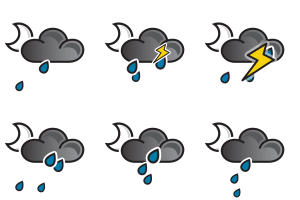
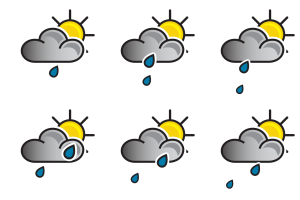
Currently, Northern and Eastern region are experincing scattered thunderstorms which is expected to continues over those areas in the next six hours.
Elgon areas mainly low lying areas may experience flash floods this evening due to heavy thunder rain.
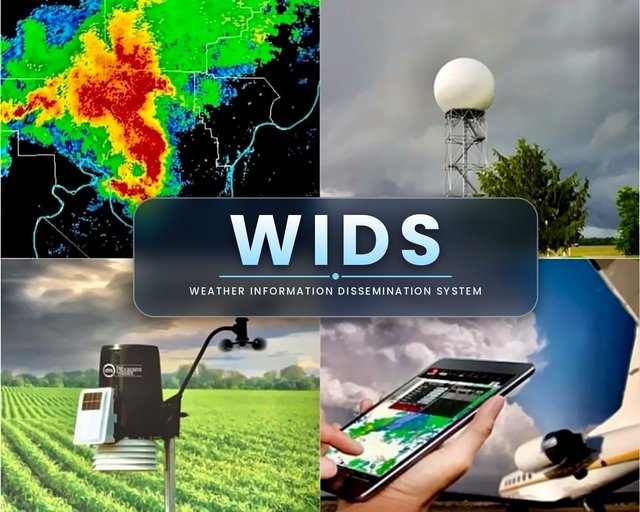

| District | Condition | Temp | Wind Direction | Wind Strength |
|---|
| Region |
12AM–6AM
Early Morning
|
6AM–12PM
Late Morning
|
12PM–6PM
Afternoon
|
6PM–12AM
Late Evening
|
Avg | |
|---|---|---|---|---|---|---|
| 1 | Central Northern | 21° | 28° | 29° | 23° | 25° |
| 2 | Northeastern | 20° | 27° | 28° | 23° | 25° |
| 3 | Northern Kyoga | 20° | 26° | 28° | 24° | 25° |
| 4 | Northern Rwenzori | 20° | 26° | 27° | 25° | 25° |
| 5 | Eastern Kyoga | 20° | 26° | 29° | 22° | 24° |
| 1 | Kigezi Highlands | 18° | 22° | 24° | 20° | 21° |
| 2 | Mt. Elgon highlands | 20° | 24° | 26° | 20° | 23° |
| 3 | Mid-Western | 20° | 25° | 26° | 23° | 24° |
| 4 | West Nile | 20° | 26° | 26° | 23° | 24° |
| 5 | Eastern Lowlands | 21° | 26° | 27° | 21° | 24° |
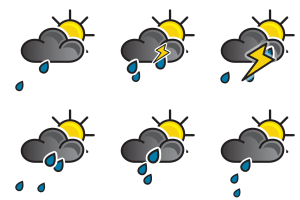
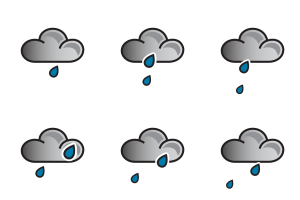
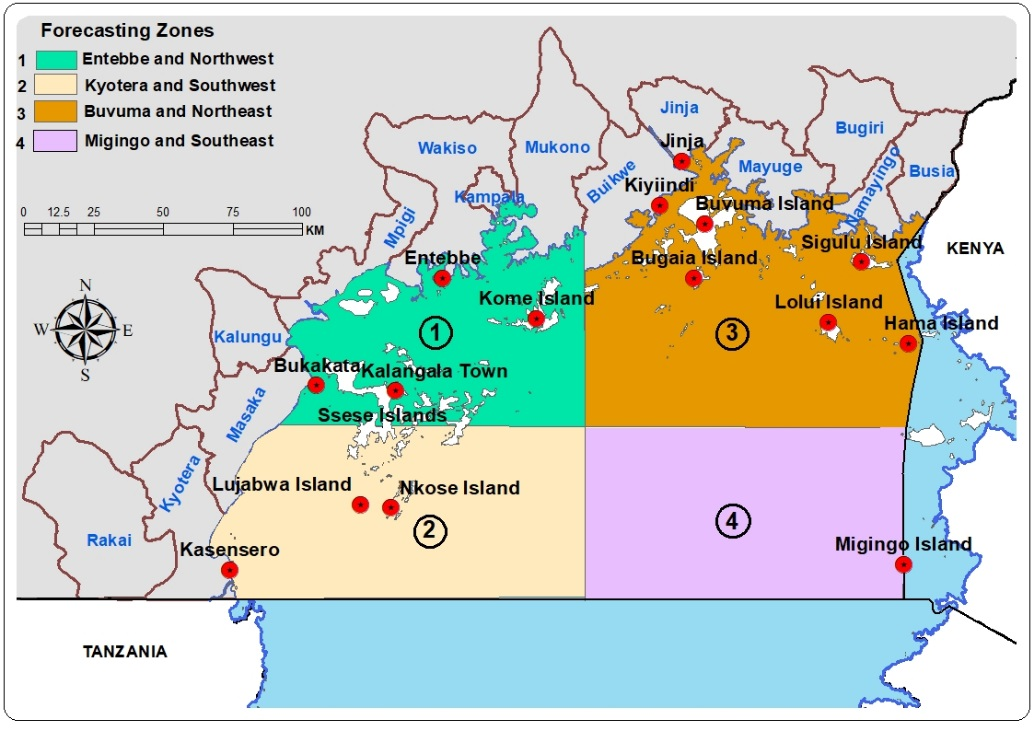
Lake Victoria Marine Forecast
No severe weather is expected. Safe conditions for fishing boats and small craft on Lake Victoria.
 cloudy
 LightWind
 NorthDirection
 SmallWaves
 GoodVisibility Isolated showers
LightWindNorthDirectionSmallWaves
GoodVisibility Isolated showers
LightWindNorthDirectionSmallWaves ModerateVisibility Partly cloudy
LightWindNorthDirectionSmallWavesGoodVisibility Isolated thundershowers
LightWindNorthDirectionSmallWaves
ModerateVisibility Partly cloudy
LightWindNorthDirectionSmallWavesGoodVisibility Isolated thundershowers
LightWindNorthDirectionSmallWaves PoorVisibility Isolated Light Showers
LightWind
PoorVisibility Isolated Light Showers
LightWind SouthDirectionSmallWavesModerateVisibility Isolated thundershowers
LightWindNorthDirectionSmallWavesPoorVisibility Partly cloudy
LightWindNorthDirectionSmallWavesGoodVisibility Isolated thundershowers
LightWindNorthDirectionSmallWavesModerateVisibility
SouthDirectionSmallWavesModerateVisibility Isolated thundershowers
LightWindNorthDirectionSmallWavesPoorVisibility Partly cloudy
LightWindNorthDirectionSmallWavesGoodVisibility Isolated thundershowers
LightWindNorthDirectionSmallWavesModerateVisibility- Wear a life jacket at all times on Lake Victoria.
- Avoid travelling at night.
- Check your zone's hazard status before you set off.
Uganda generally experiences two major rainfall seasons: March-April-May (MAM) and September-October-November-December (SOND) as the first and second rainy seasons, respectively. However, the northern and parts of eastern Uganda typically receive substantial rainfall during the June-July-August (JJA) season.
Overall, the SOND 2026 climate outlook indicates that most parts of the country are expected to receive near-normal to above-normal (near-average to above-average) rainfall, and warmer than average temperatures. The outlook of this season is expected to be associated with El Nino episode. The spatial distribution of the seasonal rainfall outlook and climatology are shown in Figures 1(a) and 1(b), respectively, and the expected temperature distribution is provided in Figure 2.

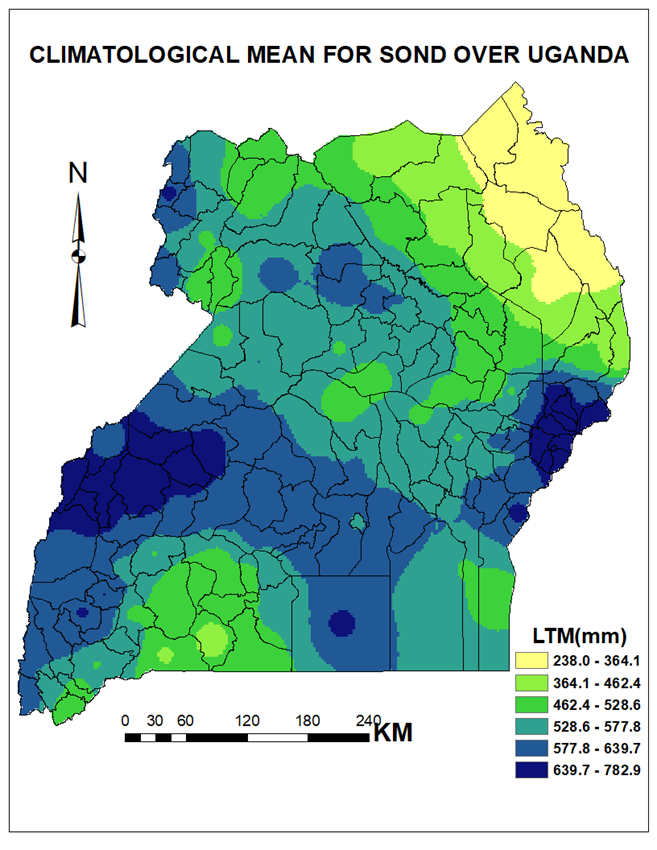

The major climate drivers expected to influence the September to December 2026 rainfall performance over Uganda include:
- The established El Niño episode is expected to intensify during the SOND 2026 season. This suggests an increased likelihood of enhanced rainfall, particularly over the Central, Northern and Eastern regions of Uganda;
- The positioning and orientation of the Inter-Tropical Convergence Zone (ITCZ) over Uganda during this season, coupled with the moisture advection of the Congo Air Mass, are expected to play a significant role in modulating rainfall distribution;
- The intra-seasonal variation of the tropical wind system known as Madden Julian Oscillations (MJO) is currently in a neutral phase, and is projected to strengthen into a dry phase over the next one to two weeks. This development is therefore likely to suppress rainfall in September 2026;
- The Indian Ocean Dipole (IOD) is currently in the neutral phase and is projected to reach positive peak level around October 2026. This condition, together with El Niño is likely to enhance rainfall over most parts of Uganda;
- The regional and local features, such as large water bodies and highland areas are likely to enhance localized convection and influence spatial rainfall distribution during the season.
- Improved soil moisture and water availability for crop growth and development
- Favorable conditions for perennial crops such as coffee and banana
- Increased yields for rain-fed crops that require wet conditions
- Adequate water availability for irrigation
- Improved pasture and forage availability where crop–livestock systems are integrated
- Increased availability of agricultural produce for household consumption and markets.
- Increased risk of crop damage and yield losses due to extreme rainfall, hailstorms, strong winds and flash floods
- Increased risk of soil erosion, nutrient leaching, water logging and declining soil fertility, particularly in low lying areas with poor drainage
- Higher incidence of crop pests and diseases, such as fall army worm, aphids, black spot and bacterial wilt
- Damage to farm infrastructure and agricultural assets
- Reduced flowering and fruit development under prolonged wet conditions
- Increased production costs associated with pest, disease and storm damage
- Post-harvest handling (PHH) losses resulting from damp conditions, leading to mold growth, rotting and aflatoxin contaminations.
- Practice timely planting and stagger planting where appropriate
- Avoid low-lying and flood-prone areas, and where unavoidable, plant crops that have higher water requirements such as yams, sugarcane and rice
- Monitor and control pests and diseases through Integrated Pest Management (IPM)
- Promote soil and water conservation through mulching, contour farming, terracing, covering crop, drainage channels and agroforestry
- Properly harvest dry crops and store produce in improved storage facilities such as silos or hermetic bags to minimize post-harvest losses
- Establish nursery beds in well drained areas to minimize waterlogging and disease risks associated with too much water such as viral and fungal diseases
- Invest in value addition and proper market timing to maximize economic returns
- Diversify crops and use suitable, high-yielding varieties, i.e. mix long maturing and short duration crops to maximize yields
- Apply Good Agronomic Practices (GAP) including timely weeding, proper spacing, thinning and fertilizer management
- Protect crops and farm infrastructure against strong winds and hailstorms
- Practice proper post-harvest handling, storage and early marketing
- Promote agricultural insurance where available.
- Increased availability of natural fish food sources in lakes, rivers and other water bodies thus boosting fish production
- Potential increase in fish production especially flood adaptive fish species due to expanded breeding and feeding habitants
- Improved water availability and water quality for aquatic species
- Improved fish growth and productivity where water quality remains suitable.
- Increased fish escape and losses due to flooding of ponds and uncontrolled overflowing
- Damage to fisheries infrastructure such as ponds, cages, boats and landing sites
- Increased siltation and turbidity in fish ponds resulting in oxygen depletion
- Disruption of fish breeding, migration and distribution
- Fish stress and mortality due to poor water quality
- Increased safety risks to fishermen during severe weather.
- Strengthen pond embankments and maintain spillways and drainage channels
- Locate ponds away from flood-prone areas
- Raise pond dykes and stock fish in ponds to take advantage of increased water availability
- Install screened inlets and outlets to minimize fish escape
- Construct sediment traps and maintain vegetative buffer strips
- Regularly inspect and reinforce fish cages, nets, anchors and mooring systems
- Secure boats and fishing equipment before storms
- Avoid fishing during thunderstorms and strong winds
- Protect wetlands, riverbanks, breeding grounds and fish migration routes
- Monitor water quality, particularly dissolved oxygen and temperature
- Avoid overfeeding and remove dead fish and organic waste promptly
- Regularly follow weather updates and advisories before you head to lakes and rivers for any fishing activities.
- Increased pasture and forage availability for grazing
- Improved livestock nutrition and quality of milk and meat
- Adequate water availability and replenishment of water sources for livestock
- Reduced pressure and competition over natural grazing and water resources.
- Increased risk of livestock disease and vector infestation including ticks, FMD's, Pneumonia, trypanosomiasis and coccidiosis
- Livestock injuries, deaths and displacement during floods and severe storms such as lightning
- Damage to pastures especially in flood prone areas due to waterlogging
- Overstocking of animals in confined places during heavy rains may result in disease outbreak
- Contamination of drinking water points thus causing animal poisoning
- Loss of livestock productivity and increased veterinary costs.
- Strengthen vaccination programs, deworming, disease surveillance and ensure timely animal treatment
- Provide clean and safe drinking water points for animals
- Avoid grazing in flood-prone and waterlogged areas
- Improve drainage in animal shelters and construct waterproof roofs, where possible
- Construct livestock shelters on raised, safe and well-drained ground
- Prepare livestock evacuation plans for flood-prone areas during periods of heavy storms
- Protect animals from hailstorms, lightning and thunderstorms
- Harvest and preserve excess pasture as hay and silage to prevent spoilage after peak periods of rainfall
- Improve water-storage facilities and livestock watering points
- Promote value addition and early marketing of livestock products.
- Adequate soil moisture to support flowering plants and nectar production
- Adequate water availability for bee colonies
- Potential improvement in bee colony productivity and honey production due to abundance of flowering plants during the rainy season.
- Destruction of apiary infrastructure due to strong winds and heavy rainfall
- Colony stress, absconding and possible colony losses
- Higher risk of fungal and bacterial infections due to excessive moisture and weakened colony immunity
- Increased hive pests such as wax moths and small hive beetles
- Reduced honey production where strong winds or excessive rainfall destroy flowers.
- Establish apiaries on elevated, well-drained ground
- Avoid flood-prone locations
- Secure hives and use strong hive stands
- Establish windbreaks and sheltered apiary sites
- Provide appropriate shade and protection from harsh weather
- Enhance monitoring, disease surveillance and pest control
- Apply integrated pest management while protecting pollinators
- Plant flowering crops around apiaries to maintain forage availability
- Avoid use of harmful pesticides during spraying near apiaries to protect bee colonies
- Monitor colonies closely following heavy rainfall and severe storms.
The anticipated above-normal rainfall across most parts of the country is likely to have significant socio-economic implications. While the western and northeastern regions are expected to receive near-normal to above-normal rainfall, the broader country is expected to experience above-normal rainfall with an increased likelihood of extreme weather events during the season. The expected potential impacts on different sectors and their corresponding advisories are presented below.
The seasonal forecast for September to December, 2026 season reveals that near-normal to above-normal rainfall is expected in most parts of Uganda. However, the onset of rains will vary by region, with most areas expected to experience late onset. The rainfall peak is expected by the end of October to November, and the season is projected to extend up to early January 2027 in most parts of the country.
The predicted rainfall requires timely action to mitigate risks and take advantage of favorable conditions. This forecast should guide planning in all climate-sensitive sectors to enhance economic resilience and community well-being.
The Ministry of Water and Environment will continue to monitor weather patterns and regularly issue updates to support planning and decision-making.
21st – 31st October 2026
Valid now · until 31 Oct 2026Ten-day rainfall and temperature outlook with expected impacts and advisories for farmers and other sectors.
Download full bulletin (PDF)Most areas of the country are expected to continue receiving occasional to moderate rainfall during the forecast period, apart from Karamoja sub-region and its neighbouring districts that are likely to remain relatively dry with isolated light rainfall.
Rainfall is expected in Western region stretching from south western in Kigezi and Ankole parts up to Bunyoro sub region, Central, Northern (West Nile, western parts of Acholi and Lango sub-regions), and upper belt of Elgon mountain sub regions.
Exceptional rainfall is expected in South-Western parts of Kigezi, Ankole and neighbouring areas.
Dry area: Karamoja sub region and some neighbouring districts have higher likelihood of remaining dry with a few areas receiving isolated light rainfall.
The daily diurnal temperatures are expected to range from 16°C to 34°C over most parts of the country. The northern, eastern, rift valley areas of Kasese and Pakwach are expected to experience the highest maximum temperatures ranging from 32°C to 34°C; while the daily average minimum temperatures are likely to range from 12°C to 22°C. Temperatures of some areas are expected to be modified by the vegetation covers, inland water bodies and mountain ranges.
During the last second dekad (ten days) of October, most parts of the country received moderate rainfall except for the Karamoja sub-region and neighbouring districts, which remained predominantly dry, with isolated light showers. The western sector received substantial amounts of rainfall, with flooding incidences reported in some areas.
- The expected enhanced and moderate rainfall over most parts of the country have high possible potential risks of flooding, landslides, transport disruption and infrastructure damage.
- The wet conditions are likely to result into contamination of unprotected water sources due to surface runoff, leading to outbreaks of waterborne diseases like cholera, dysentery and typhoid, alongside increased malaria transmission from stagnant water breeding sites.
- Strong and gusty winds resulting in blowing off of roof structures and plants.
- Likelihood of lightning incidents over most parts of the country.
- The areas to be dry are likely to have high risks of water stress and pasture depletion.
- Farmers should undertake planting and use appropriate crop varieties suited to the expected rainfall conditions.
- Livestock keepers should avoid animals to remain in flooded areas.
- Dig drainage channels to divert excess water from gardens to avoid waterlogging.
- Communities living on vulnerable steep slopes should stay highly alert and temporarily relocate to safer lowlands or host safer families if cracks appear in the soil.
- Urban Authorities are advised to swiftly clear silt and garbage from drainage channels, open storm drains, and cover open manholes to prevent drowning.
- Communities are encouraged to boil or treat all drinking water.
- Intensify household hygiene, ensure pit latrines are well-covered, and clear bushes and stagnant water around homes to reduce mosquito breeding grounds.
- Communities are advised not to cross flooded areas.
- The public and school children are advised not to seek shelter under isolated trees, tents, open-sided pavilions, football fields or roof structures that lack lightning arresters during thunderstorms.
- Areas expected to have dry conditions should monitor rainfall, soil moisture, crop conditions, pasture availability and water sources.
- Monitor and report any emergence of crop pests, animal parasites, and plant diseases to authorities.
A dekad is a ten-day period: each month has three (1st–10th, 11th–20th, and 21st to the end of the month, so the last dekad has 8–11 days). A year has 36 dekads.
Weather Alerts
Official early-warning alerts for Uganda, issued under the Common Alerting Protocol (CAP).
There are no active watches, warnings or advisories
Press and hold the picture to save or share it